.png)
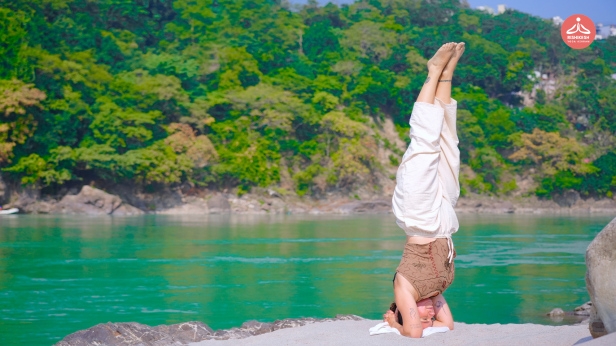
How to Do Shirshasana (Headstand Pose): Steps, Precautions, Benefits, Alignment Guide & Variations
Shirshasana (Sirsasana or Sirshasana) is also referred to as “the King of Yoga Poses” because by turning your body upside-down and resting on the top of your head, your body, mind and yoga practice will all go through a transformation.
When you join us at Rishikesh Yoga Ashram in Rishikesh, you will learn about Shirshasana with care and respect; because it requires patience, awareness and mindful breathing - not just physical skills; every person from beginner to advanced practitioner can be successful in their learning process using this easy-to-use guide.
What Is Shirshasana?
Shirshasana (also spelled Sirsasana or Sirshasana) comes from two Sanskrit words, and thus Shirshasana means a “posture on the head.” In this position, the weight of your body is balanced on top of your head and is supported by your arms on the ground. Shirshasana has numerous benefits for both the physical body and mental well-being; it has a place of honor among the major forms of Yoga practice that is demonstrated in both Hatha and Ashtanga systems of Yoga, and is also included in most of the traditional texts on Classical Yoga.
Benefits of Shirshasana
First, it's important to know what you're trying to accomplish by doing this pose. Below are some of the known benefits:
1. Physical Benefits
- Increase blood circulation to the brain and scalp
- Build strength in your shoulder, arm, and core muscles
- Improve balance and coordination
- Assist with the functioning of the pituitary and pineal glands
- Relieve pressure on your lower back and legs
- Alleviate mild fatigue/sluggishness
2. Mental and Emotional Benefits
- Soothing an overactive/anxious mind
- Creating/fostering mental focus and clarity
- Developing patience and a sense of being aware of your body
- Conjuring up feelings of self-confidence and inner peace
3. Energetic Benefits
- Activating the Crown Chakra (Sahastrara)
- Changing the direction of downward moving energy (Apana Vayu) and redirecting it upwards
- Creating feelings of lightness and alertness after you perform this pose.
Who Should Avoid Shirshasana?
Shirshasana is another very strong pose; however, it may not be appropriate for everyone. Do not do this pose if you have one of the following conditions:
- People with high blood pressure or low blood pressure
- People with heart conditions
- People with neck and/or back injuries
- People with glaucoma or other pressures in the eyes
- People with active ear infections
- People with severe headaches or migraines
- People during menstruation
- People who are pregnant
- People feeling dizzy/unwell or extremely fatigued
If you are unsure, please check with either your qualified teacher or physician prior to doing Shirshasana.
Alignment Guide: Key Points to Remember
Maintaining proper alignment in the initial stages of a new yoga practice ensures safety for you and promotes longevity in the pose. The following is a quick reference for each body part:
|
Body Part |
Visual Representation |
|
Head |
Crowning on the mat, not your forehead |
|
Neck |
Long, relaxed and not crunched |
|
Elbows |
Shoulder-width apart and firmly pressed downward |
|
Shoulders |
Lifted away from your ears; active and strong |
|
Core |
Gently engaged throughout the pose |
|
Lower Back |
Neutral; no excessive arching |
|
Legs |
Straight and actively engaged with toes pointed towards the ceiling |
The most important rule: If you are feeling any type of discomfort/pressure in the neck area, stop the pose immediately.
Shirshasana Variations
When you’re confident and comfortable doing a standard headstand, try these different types of headstands to further develop your practice:
1. Supported Headstand With Wall (Beginner-Friendly)
Use a wall to aid in establishing balance as you transition away from balance-deficient areas. This also builds more strength and confidence prior to practicing without a wall.
2. Tripod Headstand (Mukta Hasta Sirsasana)
By using your hands flat on the ground rather than interlacing your fingers, you now have your head as part of a tripod. Much more strength in the upper body is required for this variation.
3. Bound Angle Headstand (Baddha Konasana in Sirsasana)
When in this headstand position, your feet should be brought together and your knees opened as wide as possible (like in a Butterfly pose) while being inverted.
4. Wide-Legged Headstand (Prasarita Sirsasana)
Once you’ve achieved this headstand position, open your legs outward on both sides. This isolates your inner thighs and provides an alternative way to use your body in this yoga pose.
5. Lotus Headstand (Padmasana in Sirsasana)
This advanced variation is performed by crossing your legs into a Padmasana (Lotus) position while in a fully inverted headstand. This pose is a challenge for even an intermediate yogi.
.png)
How to Do Shirshasana: Step-by-Step Guide
What You Need
- Yoga mat (either folded or with a towel underneath).
- Wall to lean against (especially if you haven't done it before).
- Empty stomach (it is a good idea to wait 3 to 4 hours after a meal).
Step 1: Come to Child's Pose First
In order to get started, begin with a position known as Child’s Pose (Balasana). This will help to warm up the neck and shoulders and should include a few slow, deep breaths.
Step 2: Set Your Forearm Foundation
Next, come onto your hands and knees and place your forearms on the floor. Interlace your fingers tightly (creating a cup shape) so that the elbows are about shoulder-width apart (not wider).
Step 3: Place the Crown of Your Head
Gently place the crown of your head into the cup formed by the hands (not the forehead or back of head) and lightly press the back of your head into the fingers that have been clasped together. Make sure to press down firmly through the forearms into the floor, maintaining an equal amount of weight in each forearm.
Step 4: Lift Your Knees (Dolphin Position)
From this position, tuck your toes under and lift your knees off the ground into an upside-down V shape (Dolphin Pose). Walk your feet as close to your elbows as you can comfortably. Your hips will be above your shoulders.
Step 5: Engage Your Core and Begin to Lift
Bend one leg and slowly bring your knee into your chest. Then bend your other leg and bring it into your chest. You will hold onto both of your knees as you find balance.
Breathe a few times while you are in this position. Do not rush.
Step 6: Extend the Legs Upward
Once you feel comfortable with your knees pulled in, begin to slowly extend your legs towards the ceiling. Your hips should be engaged, toes up, and abs in.
Step 7: Hold and Breathe
Breathe through your nose, while having a soft focus with your eyes (open, or focused on something) as you exhale and hold for 10 to 30 seconds as a beginner. After practicing this, you can work on being able to hold for 3 to 5 minutes or longer.
Step 8: Come Down Slowly
Bend your knees and gently lower each leg to the floor before returning to Child’s Pose for at least 30 seconds so the blood can circulate back up to your head.
Common Mistakes to Avoid
Regardless of how skilled you may think you’ve become at doing yoga, there are still simple things you can do that will let you become more proficient when practicing.
Here are a few of these mistakes and how to prevent them.
- Excessively bearing down on your neck will cause injury; you should properly distribute the weight so that most of the load is carried by your forearms and shoulders.
- Rushing into your pose without developing a strong foundation from which to support it may cause injury.
- You should be able to maintain an even and smooth breath at all times.
- You have to take time to rest in Child's Pose (which is a very important part of this process); this is not optional.
- You should practice building shoulder strength first because both Dolphin Pose and Downward-Facing Dog are excellent preparation poses for Shirshasana.
Keeping your gaze or turning your head while practicing Shirshasana is an injury waiting to happen; you should maintain an entirely still head and fixed gaze.
How to Prepare for Shirshasana
The best preparation poses include:
- Dolphin Pose - develop your upper body/shoulder strength
- Downward-Facing Dog - warm up your shoulder and hamstring flexors
- Plank Pose - develop your core
- Standing Forward Bend - release your hamstrings and neck tension
- Child's Pose - calm the body prior to and following your practice
Learn Shirshasana the Right Way - With a Teacher
One of the best ways to begin practicing the practice of Shirshasana (Headstand) at home would be to refer to a guide; however, nothing compares to learning this asana with experienced and qualified instructors in person. Shirshasana has the potential to create weight through the head and neck, so even a small misalignment can increase your chance of injury dramatically.
At our Ashram, our highly knowledgeable and certified teachers will help students to safely practice all inversions step-by-step. Whether you're new to yoga or wish to deepen your current practice, our supportive environment located directly on the banks of the Ganga River will allow you to truly master this transformative asana.
Our 200 Hour Yoga Teacher Training in Rishikesh covers Shirshasana and all major asana practices in great detail, along with all the necessary alignment, adjustments and contraindications for each pose. Additionally, we will teach you how each pose works and how to teach it to someone else!
The Yoga Teacher Training in Rishikesh will provide you with everything you need to build upon the foundation of your practice with a comprehensive, total experience that encompasses all aspects of yoga - including asana, pranayama, meditation, philosophy, and the ancient teachings of the land on which modern yoga originated.
Frequently Asked Questions About Shirshasana
1. What is Sirshasana?
Sirshasana or Shirshasana is the classic yoga asanas where the body is in a stand on its own crown, raised off the ground and maintained by the forearms. This is the 'King of poses' in old style yoga with lots of fitness and effects of mind benefits. It is the combination of the Sanskrit words 'Shirsha' meaning 'head' and 'asana' meaning 'posture'.
2. What are the benefits of Sirshasana?
By doing Sirshasana, you are stimulating blood flow and circulation to the brain while also strengthening your core, shoulders and arms. With regular practice, you through your pituitary and pineal glands get a greater sense of calm as well as an increase in concentration, confidence and decrease in fatigue. Energetically speaking, Sirshasana is associated with activating the Crown Chakra, allowing the downward flow of energy in the body to change to flow upwards from your feet.
3. Is Sirshasana safe for beginners?
Sirshasana is safe for those who are just starting out as long as they have proper instruction and support. For example, if you do not know how to do Dolphin Pose prior to doing Sirshasana, then it is essential that you have an experienced instructor to help develop your strength with the Dolphin Pose so when it comes time to try Sirshasana, there will not be any issues regarding strength. When at Rishikesh Yoga Ashram, we will always teach new students in a slow, progressive manner so they feel secure and confident when they are ready to attempt Sirshasana.
4. How long should I hold Sirshasana?
Beginners should gradually work their way up from 10-30 seconds of holding the pose, while intermediate and advanced practitioners can progress from 1-3 minutes and 5 or longer, respectively. The quality of your alignment takes precedence over how long you hold a posture; it's better to hold a well-aligned posture for a little while than to improperly hold a poorly-aligned posture for an extended time.
5. Who should avoid Sirshasana?
Those with high or low blood pressure, cardiovascular disease, neck or spinal injuries, glaucoma, active ear infections, or a history of migraines, should avoid this pose. This pose is also contraindicated during menstruation and pregnancy. Always consult a qualified yoga teacher or medical professional if you have any questions regarding your ability to perform this pose.
6. Does Sirshasana help with hair growth?
There is a lot of belief that Sirshasana will contribute to hair growth, and there are logical reasons for this. Increased blood circulation to the scalp nourishes the hair follicles. There are many practitioners who have experienced an improvement in their hair quality from regularly practicing Sirshasana. While rigorous scientific studies currently do not exist, increased blood flow to the scalp is generally thought to give you healthy hair and/or skin on your head.
7. Can I do Sirshasana every day?
Yes, it’s definitely possible and encouraged by most yoga systems. However, make sure to listen to your body. If you experience fatigue in your neck, fullness in your head or strain during your practice, be sure to rest and decrease your time practicing. Always follow your practice with Child’s Pose and do not practice if you are ill or very tired.
8. What are common mistakes in Sirshasana?
Common mistakes include placing too much weight on your neck instead of your forearms, rushing to complete the entire pose without building your foundation first, failing to engage the shoulders, holding your breath, and skipping your recovery time in Child’s Pose after your practice. Some additional mistakes include turning your head or moving your head while in the pose.
9. How can I learn Sirshasana safely at home?
Practice in preparatory steps against the wall until you feel like you can balance properly. Use a wall for reference to ensure that your elbows are shoulder width. If you are learning from home, you should have the use of videos by a qualified teacher to assist your learning. However, if you wish to have the assistance of a teacher, you may want to join a structured program such as those provided by Rishikesh Yoga Ashram, where certified instructors will ensure your safety while performing these poses through all stages.

