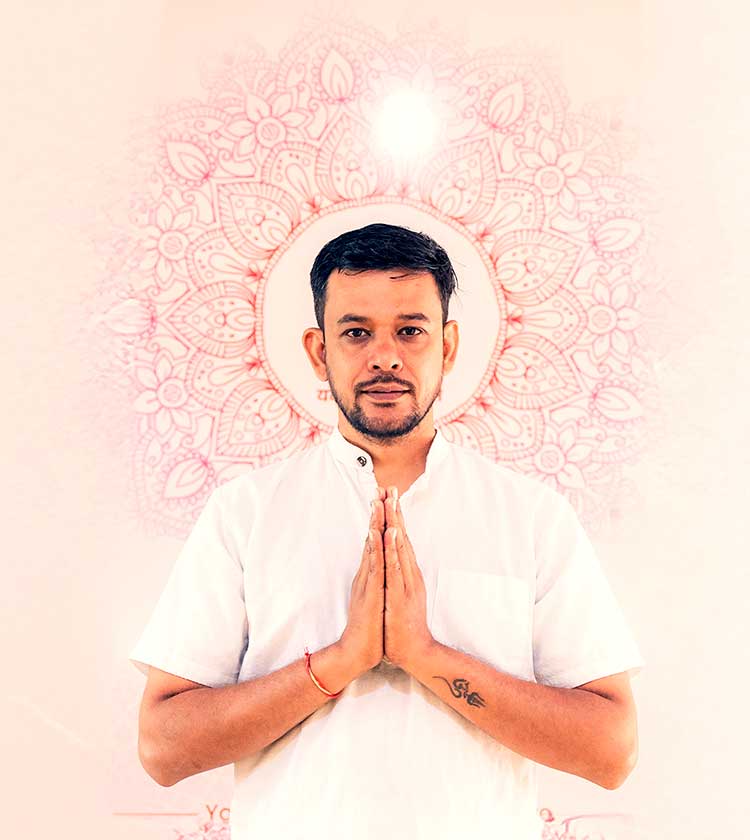
.png "Karma Yoga: The Path of Selfless Action")
All yoga traditions provide entry into a more conscious life. However, Karma Yoga stands apart from the rest because of its practical application in real life. Karma yoga selfless action is not about withdrawing from worldly life and practicing meditation in silence; instead, it teaches the art of living in the world without being attached to the outcome of actions. For students who travel to Rishikesh, the birthplace of yoga, in search of deepening their practice and knowledge of yogic philosophy, Karma Yoga lessons can be very insightful.
In this article, we will explore the essence of the discipline of Karma Yoga, selfless action, in terms of its meaning, scriptures, and implications in modern life, and how it has adapted in shaping the way people practice yoga today at ashrams located on the banks of the river Ganges.
What Is Karma Yoga? Meaning and Origins
What does karma yoga really mean? To understand the karma yoga meaning, the term karma in Sanskrit means "action" while yoga signifies "union." Thus, karma yoga is the practice of joining oneself with the divine through action as opposed to renunciation of the material world, contemplation, or rituals only. The essence of karma yoga is simple: do your work, do it well, and do it without worrying about receiving praise, making a profit, or achieving a particular result. Hence, what makes karma yoga selfless action different from mere hard work is the lack of pursuit of ego or recognition as a determinant of one's actions.
While one can work long hours without being attached to results, karma yoga demands a higher level of awareness so that the person working performs their task completely detached from the outcome. Simply speaking, it is karma yoga in daily life - cooking a dinner, being a parent, running a company, or giving a yoga class with the feeling of giving.
Karma Yoga in the Bhagavad Gita
The basis of the philosophy of Karma yoga is derived directly from religion. Karma yoga in the Bhagavad Gita is described when Lord Krishna teaches it to Arjuna, a warrior who is overwhelmed by confusion on the battlefield and unable to perform any actions because he cannot gauge their outcomes. Krishna states in Chapter 2, Verse 47 that a human may pursue his prescribed actions, but never the outcomes of these actions. As this is elaborated upon in Chapter 3 of the Gita, it becomes clear that it is impossible to be totally inactive; thus, all that a person is left with is the choices they make regarding their actions.
This is what defines the idea of Karma yoga: it is not about neglecting responsibility, but ensuring the responsibility is taken with a peaceful mind that is not disturbed by the fear of failure. Those who study the text of the Gita closely often describe it as the teaching that is the most applicable in everyday life.
Karma Yoga Philosophy: One of the Three Paths
The classical Vedanta philosophy includes three disciplines to reach liberation known as yoga: Jnana Yoga (knowledge yoga), Bhakti Yoga (devotion yoga), and Karma Yoga (action yoga). Karma yoga philosophy states that action is inevitable for any living being, and therefore must be transformed into a spiritual practice instead of being seen as a hindrance. According to Krishna, Karma yoga is easier and more sustainable than the renunciation option.
Two concepts of Karma yoga are anasakti (non-attachment) and samatva (equanimity). These concepts mean that success and failure should not disturb one's inner peace. Thus, karma yoga selfless action includes the idea of performing a task without attachment as a discipline of mind as well as a discipline of body. This is why Karma yoga has to be studied together with asana and meditation rather than in isolation. The students who want to deepen their knowledge and learn advanced yoga teaching methodology may enter our 300-Hour Yoga Teacher Training in Rishikesh after they complete the foundation course.
Selfless Service in Yoga: Karma Yoga as Seva
Seva is the resulting form of karma yoga in actual life. The meaning of seva is selfless service in the yoga community without demanding monetary payment or recognition for an individual's work. Cooking for others, cleaning the premises, conducting classes, or helping a charity organization are all kinds of seva. Seva is an example of karma yoga, selfless action, because it doesn't satisfy the goals and interests of individuals when it comes to money and attention.
This appears to be a reality in a traditional ashram. The same principle of seva can be observed in many yoga schools that were constructed by Gurukula and Himalayan traditions.
The Science-Backed Benefits of Selfless Action
Karma yoga does not merely represent a spiritual doctrine; it has also become increasingly essential for studies in psychiatry and psychology exploring how altruistic actions influence mental well-being. The paper "Doing good well (Karma Yoga, the path of selfless action): Psychotherapeutic lessons from the East" published in 2024 in the Asian Journal of Psychiatry elaborates on the notion that various ideas from Karma Yoga, for instance intrinsic motivation, tranquility, and value-driven type of behavior, have a lot in common with actual models of well-being in psychology and indicate therapeutic power of Karma Yoga outside of spiritual aspect of the tradition.
This is part of broader investigations into volunteering and altruism. According to NPR's information about researchers on the issue, charitable actions promote cardiovascular and mental well-being, which leads to the conclusion that helping behavior should be considered an effective public health measure.
How to Practice Karma Yoga in Daily Life
It's not necessary to stay in an ashram to practice karma yoga. Here are some practical suggestions to help you get started:
- Every day, try to act to help someone without expecting anything back in return. It could be a simple task - some chores, getting someone coffee, doing some work.
- Observe the attachment to results when it occurs. If you're feeling apprehensive about success, acknowledgment, or comparisons, simply redirect the attention to the action itself.
- Reconceptualize everyday activities as offerings. You can approach your job, household chores, or teaching as acts of service instead of duties.
- Volunteer on a regular basis - without expecting anything back. Offering help is what facilitates the development of the philosophy and the emotional component of karma yoga more effectively.
- Combine action with reflection. Spend a few minutes every day meditating or journaling to be able to see if your ego made the decisions instead of you.
Karma Yoga at Rishikesh Yoga Ashram
At the school, which is situated on the banks of the river Ganges, the principles of karma yoga are not taught as lectures only, but are incorporated into the daily life of the ashram. Students express their opinion that studying this particular path, as well as their studies of asana, pranayama, and meditation, contributes to the improvement of their knowledge in teacher training programs. If you have some more questions in regard to philosophy in our programs, you can find answers in our FAQ page, where we provided answers for the frequently asked questions concerning our curriculum and courses.
Begin Your Own Path of Selfless Action
Understanding the essence of karma yoga, selfless action, is just the first step; you will need to follow a process involving some guidance, community interaction, and some time away from societal distractions.
If you want to learn more about karma yoga, join our program devoted to yoga philosophy, meditation, and serving at a traditionally run gurukul in the Himalayas.
Frequently Asked Questions
1. What is karma yoga in simple terms?
Karma yoga essentially refers to the idea of doing your job without being attached to the results - doing the right thing because you know it is right and not for any benefit.
2. Is karma yoga only about religious or spiritual duty?
You should not think that karma yoga is only related to faith or religion, as it originated from one sacred book, the Bhagavad Gita.
3. How is karma yoga different from other paths of yoga, like Bhakti or Jnana Yoga?
While Bhakti yoga is focused on devotion and Jnana yoga emphasizes getting knowledge through self-inquiry, karma yoga implies taking action and following daily duties.
4. Can karma yoga help with stress or burnout?
Recent studies show that acting selflessly while remaining detached can help alleviate anxiety related to personal outcome expectations and thus improve the quality of life, provided that this practice is a part of a broader approach rather than a sole solution to burnout.
5. How can I start practicing karma yoga if I'm a beginner?
Start small by performing one service or duty a day in a detached manner. Mindfully observe your thoughts about the action without trying to motivate yourself with the prospect of a positive outcome. Structured education like yoga teacher training will allow you to perform the practice that is complemented with relevant philosophy and community lifestyle.

