To experience the essence of pranayama, one needs to take a few deep breaths and concentrate on relaxing one's shoulders and clearing one's mind. Even though yoga breathing seems spontaneous, it is based on a whole science called pranayama which consists of various techniques which serve different purposes.
According to its pranayama definition, pranayama is the fourth component of yoga which has already been subject to numerous scientific studies in terms of its impact on human health. In this guide, you are going to learn more about the meaning and classification of pranayama, the major types of pranayama and advantages of this yoga technique, and get answers to some commonly asked questions about breathing methods for the treatment of different diseases, including hypertension and thyroid diseases. The knowledge you will acquire is included in our 200 Hour Yoga Teacher Training in Rishikesh.
Pranayama Definition: What Does Pranayama Mean?
The world of yoga uses the term pranayama which combines the Sanskrit words prana (the life force) and ayama (to extend or control). In short, it means the extension and control of breath. Pranayama differs from the usual meaning of “breathing exercises” because it is a systematic process made of three parts: Puraka (inhalation), Kumbhaka (retention of breath), and Rechaka (exhalation).
Historically, yogis thought that keeping these three phases under control allowed them to guide prana through the nadis, the subtle energy channels spread throughout the body. Nowadays, modern science gives a clearer explanation of the effect of pranayama as controlled breathing influences the autonomic nervous system.
How Many Types of Pranayama Are There?
A common inquiry concerns the various kinds of pranayama. The truth is that this depends on the yoga tradition or the text you believe in. Some traditions mention only four basic techniques, while the classical texts of Hatha Yoga speak of eight and more. Nevertheless, in contemporary yoga instruction, people practice about 7 types of pranayama techniques. The table below presents the most common pranayama names and their functions.
7 Types of Pranayama and Their Benefits
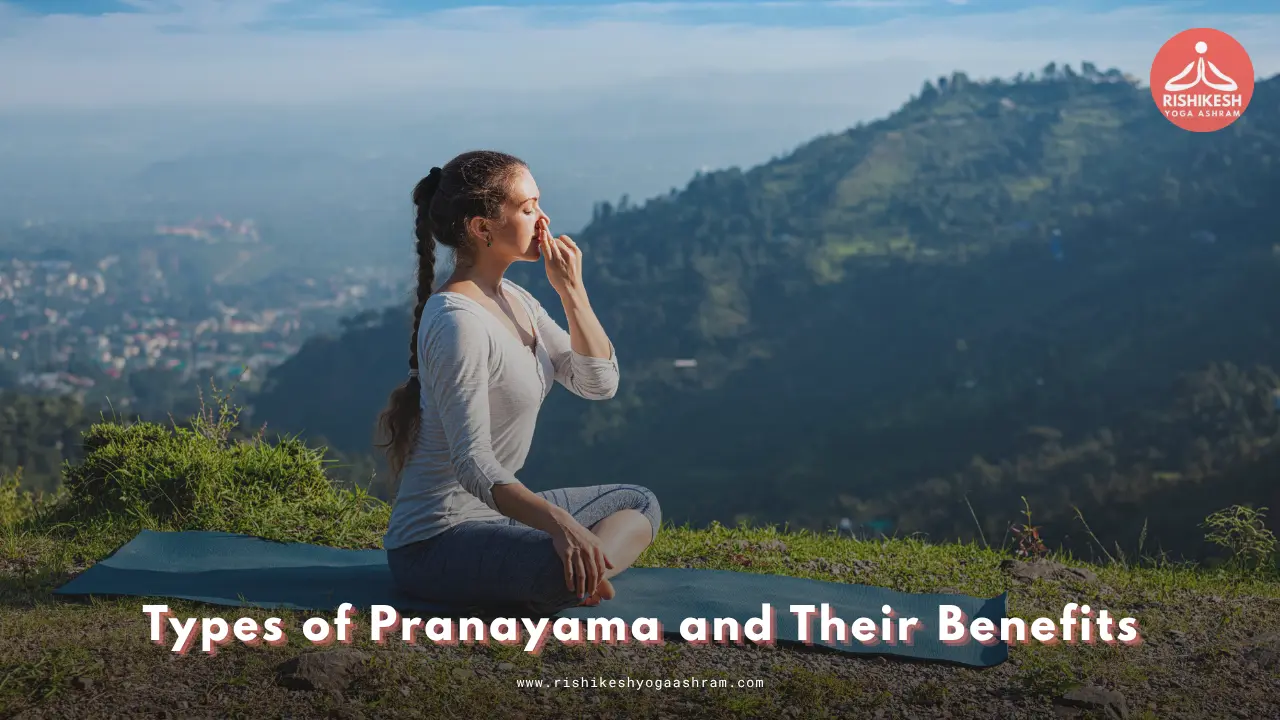
1. Anulom Vilom (Alternate Nostril Breathing)
This method is probably the most well-known gentle approach where a person inhales through one nostril and closes another before switching nostrils again. The technique achieves a balance between the two hemispheres in the brain and calms the nervous system thus helping mitigate stress and mild anxiety symptoms.
2. Bhastrika Pranayama (Bellows Breath)
Bhastrika is a speeded-up, forced method of breathing in and out through the nostrils thus energizing one’s body and increasing oxygen intake. This method of pranayama is often practiced in the morning in order to boost one’s level of alertness.
3. Kapalbhati Pranayama (Skull Shining Breath)
Kapalbhati is a cleansing technique and type of pranayama that involves rapid exhalation and inhalation. It is said to help tone the abdominal muscles and improve digestion thereby serving as a detoxification technique.
4. Bhramari Pranayama (Humming Bee Breath)
Bhramari, which involves exhaling while producing a soft humming sound, is among the most effective practices in the system. It is often suggested for alleviation of anxiety, tension headaches, and - as we shall see below - blood pressure control.
5. Ujjayi Pranayama (Ocean Breath or Victorious Breath)
The Ultimate pranayama gives a slow, audible breath resulting from subtle constriction of the throat. Ujjayi pranayama is typically used in practicing the asanas, enabling body temperature regulation, concentration, and the creation of rhythm in movements.
6. Sheetali and Sheetkari Pranayama (Cooling Breaths)
The methods include inhaling through tongue rolled into a tube shape or closed teeth, which cools the air inhaled. This pranayama allows reducing body temperature, calming down anger/stress, and improving the digestion process.
7. Surya Bhedana Pranayama (Right Nostril / Sun-Piercing Breath)
Surya Bhedana Pranayama (the Right Nostril Breathing technique) is characterized by inhaling air via the right nostril and exhaling air through the left nostril which renders it as a form of pranayama that is warming and active in nature. It is also associated with the energizing sun energy and this method is widely used to enhance alertness and improve digestion as well as relieve lethargy and fatigue. Additionally, it is worth mentioning that in some traditions there is an addition of Chandra Bhedana Pranayama (the opposite of Surya Bhedana Pranayama), Pranav Pranayama (a form of pranayama based on chanting) as well as Bahya Pranayama (a kind of pranayama involving retention of breath).
Pranayama for High Blood Pressure
The most frequently asked question is which pranayam for high bp actually works, and which is one of the well-researched topics of this practice. According to a random clinical research based on people with hypertension, Nadi Shodhana (the type of pranayama where both nostrils are involved alternately) as well as Bhramari Pranayama used for about 20 minute has a balancing effect on the functioning of sympathetic and parasympathetic nervous systems of humans and thus supports the fact that pranayama can be useful in controlling hypertension.
During a separate investigation where only Bhramari Pranayama was tested, it was established that this practice significantly decreases systolic blood pressure, diastolic blood pressure and pulse rate of people suffering from high blood pressure. At the same time, slow and deep breathing methods have been proved to be useful in order to decrease blood pressure and pulse rate which makes these techniques available for everyone. The systematic review and meta-analysis presented recently and summarizing multiple trials dedicated to the same topic shows that pranayama has a huge potential aimed at resolving hypertension issues for low cost and without risk to health.
So, which pranayam is good for high bp? Based on present study, Bhramari Pranayama and Anulom Vilom (Nadi Shodhana) are regarded as best pranayam for high bp as they are both relaxing techniques that facilitate parasympathetic functioning without exerting stress on the heart. On the contrary, techniques that are forced or aggressive should be avoided or approached cautiously by patients with high blood pressure.
Pranayama for Thyroid Health
Low-intensity throat-related pranayama techniques are generally recommended for issues related to the thyroid. Ujjayi Pranayama and Bhramari Pranayama help the throat to tighten and produce the humming sound respectively and help in easing relaxation and circulation to promote thyroid region health. The pranayama practice must accompany medical treatment and not replace it.
Asanas for High Blood Pressure
Pranayama works best in combination with relaxing asanas for high bp, which typically includes restorative and forward bending poses, like Child's Pose, Legs Up The Wall and Sukhasana with deep breathing, which are believed to be safe hypertension yoga asanas, since they help relax the mind without any body inversion and strain on the heart. The research around the question of does yoga lower blood pressure is being corroborated by the science showing that gentle yoga practice combined with pranayama practices does have a positive impact on the blood pressure control as part of comprehensive lifestyle treatment.
Who Should Be Careful With Certain Pranayama Techniques?
- High blood pressure or heart problems: Steer clear of intense or heating techniques like Surya Bhedana, and intense Bhastrika or Kapalbhati, but utilize calming practices like Bhramari and Anulom Vilom.
- During menstruation: Many instructors recommend avoiding the practice of intense and heating pranayama like Surya Bhedana or intense retention, as it can bring excess heating and disrupt the natural process. Instead, Anulom Vilom or easy deep breathing practices may be employed.
- Pregnancy: Avoid deep retention and heating practices in yoga, and consult with a teacher of prenatal yoga for safe practices.
- Fever, breathing problems, or dizziness: Any practices with vigorous breath need to be avoided until complete recovery has taken place.
- Beginners: Take classes from a qualified instructor, especially for practices involving retention, as improper practice of Kumbhaka may lead to symptoms of dizziness.
Building a Real Practice
Understanding pranayama through reading is good, but true change will only take place through continuous practice with guidance. Those who want to get deeper knowledge of breathing techniques for personal or teaching purposes should consider taking up a yoga teacher training in India, which provides an opportunity to learn this discipline in a systematic way. Programs like our 200 Hour Yoga Teacher Training in Rishikesh offer a lot of time for focusing on the theory and practice of pranayama as well as asana and meditation. In case you are not ready to get a full certification, a shorter yoga retreat in Rishikesh is a great opportunity to experience pranayama and its effects under supervision of experienced instructors in the foothills of the Himalayas, where this technique has been perfected for centuries.
Bottom Line
Pranayama extends beyond what we know as "deep breathing" since it is a careful and well-thought out method of controlling breath that produces worthwhile effects for the nervous system, blood pressure, or stress levels. There are many types of pranayama - while Bhramari and Anulom Vilom are calming types, Bhastrika and Surya Bhedana are energizing. The type of pranayama that fits the body condition in mind should be chosen. Those who are dealing with high blood pressure should prefer peaceful and mild techniques instead of vigorous ones. Teachers' guidance during the learning process is irreplaceable.
Ready to build a real, safe pranayama practice from the ground up? Explore our 200 Hour Yoga Teacher Training in Rishikesh and residential yoga retreat programs at Rishikesh Yoga Ashram.
FAQs
1. What do you mean by Pranayam? What is the meaning of Pranayam?
Pranayam refers to a process of intentional control and enhancement of one’s breath. This word is derived from the Sanskrit term "Prana" (vital energy) and "Ayama" (control or extension).
2. Which Pranayam is good for the heart?
Bhramari and Anulom Vilom (Nadi Shodhana) can be beneficial for the heart as studies show they help to balance the autonomic nervous system, reduce blood pressure, and decrease heart rate.
3. Can we do Pranayam during periods?
There are gentle techniques like Anulom Vilom or just deep breathing, which can be done during periods of menstruation. However, it is advisable not to do strong techniques like Surya Bhedana because they may increase the heat of the body and disturb the natural flow of the body.
4. Which Pranayama is most powerful?
Different Pranayama techniques have different purposes so there cannot be one technique, which can be called the most powerful. The technique of Bhastrika has the quality of bringing the most energy, while Bhramari can be the most relaxing and the one that has been studied the most. Anulom Vilom is considered balanced and one technique, which can be applied in most situations.
5. What are the 4 types of breathing?
It can be said that there exist four different classifications of breathing, which can be divided in the following way: the chest breathing, abdominal breathing, clavicular breathing and the complete yogic breathing practice which unites all three of them.
6. Can sound frequencies really heal?
The latest studies suggest that sound-therapy techniques like chants, humming (like in Bhramari Pranayama) and sound vibrations can significantly alleviate stress, strain, and anxiety by soothing the nervous system, while showing the best results when combined with other methods of treatment.
7. Is it safe to practice Pranayama every day?
Gentle methods like Anulom Vilom and Ujjayi can be practiced on a daily basis, whereas the more intense techniques, which involve prolonged periods of breath-holding or fast breathing, must be learned under the supervision of experienced teachers and, as a rule, should also be practiced moderately by novices.

